
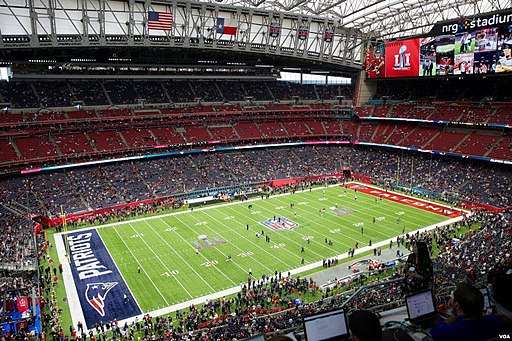
Artificial intelligence’s most commercially valuable battleground moved into prime time during this year’s Super Bowl, as leading developers used advertising slots to promote coding tools rather than consumer chatbots. The campaign shift underscores how software creation has emerged as the sector’s most contested and monetisable use case.
OpenAI aired a 60-second commercial highlighting its AI coding agent Codex, positioning it as a creative enabler under the tagline “You can just build things”. The message sought to frame AI not merely as an assistant answering queries, but as a system capable of turning ideas into functional products, from websites to tracking applications. The strategy reflects an industry pivot towards high economic value tasks, particularly coding, where engineers command premium salaries and output can be directly measured.
Anthropic has pursued a similar focus, training its models intensively on coding tasks and building a revenue base around developer-facing application programming interfaces. It has since launched its own coding product, Claude Code, and investors credit its tight enterprise feedback loops and infrastructure prioritising speed and reliability with strengthening its competitive position. Its latest valuation is reported at about $350 billion.
OpenAI is seeking to regain ground through both research and marketing, with its GPT-5.3-Codex model topping several benchmarks evaluating coding and reasoning performance. Google is expanding its push following the acquisition of Windsurf, while Chinese open-source players such as DeepSeek, Qwen and Kimi are improving rapidly, lowering barriers for new coding-focused startups.
The commercial intensity reflects broader capital commitments. Major technology companies are collectively expected to spend more than $600 billion on AI this year, with Amazon planning roughly $200 billion in AI-related investments in 2026. Bank of America estimates five leading firms could borrow about $140 billion annually over the next three years to fund expansion. The outcome of the coding race may determine which company establishes AI’s first durable revenue model.