
Inside Huawei’s Sanctions-Era Chipmaking Bet
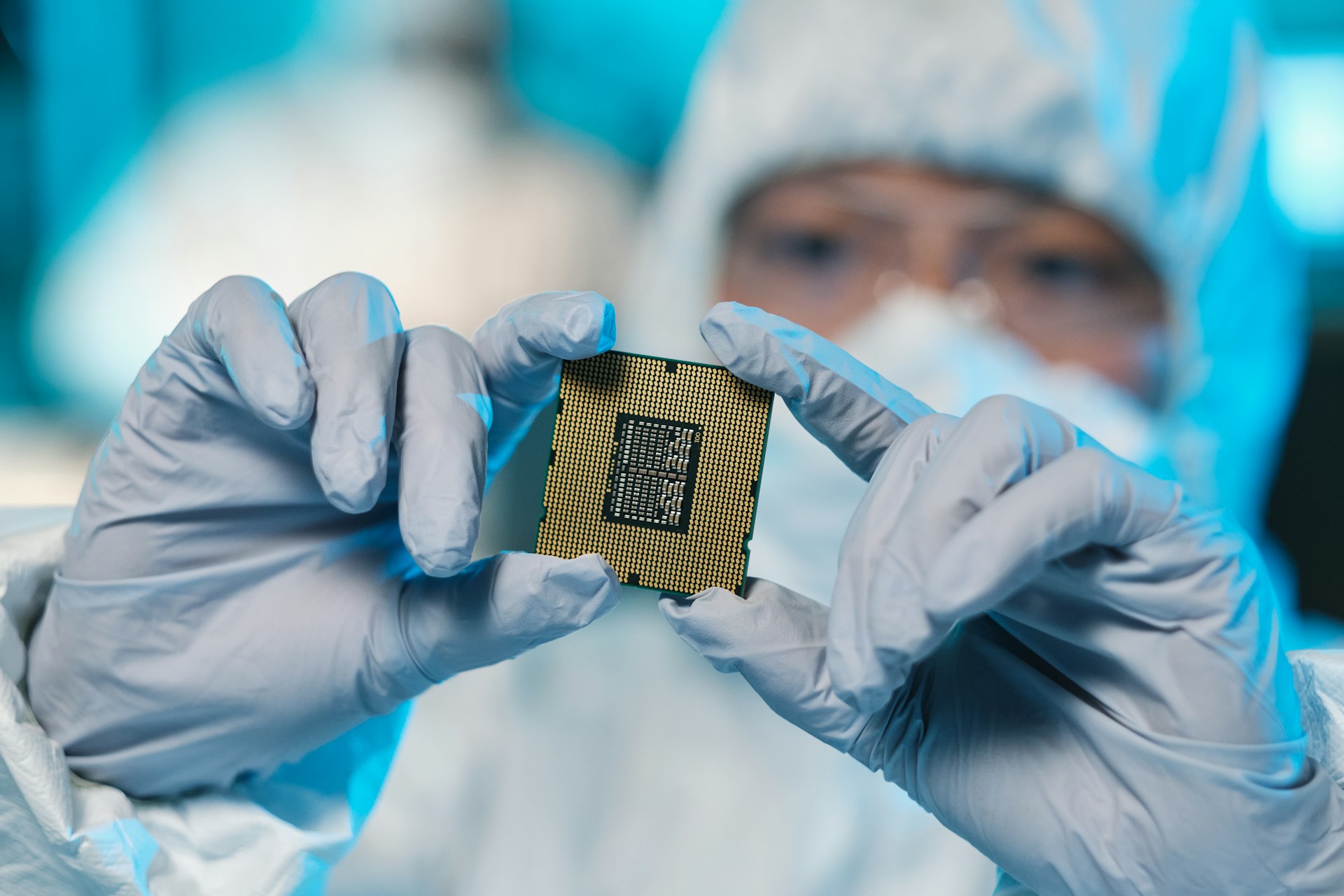
Huawei’s latest semiconductor strategy shows how China’s technology sector is trying to turn constraint into engineering direction. At a symposium in Shanghai, the company said it aims to design high-end chips by 2031 with transistor density equivalent to 1.4-nanometre processes, close to the level expected at the global frontier of advanced chipmaking by the end of the decade.
The ambition matters because China’s most advanced proven chipmaking capability is widely viewed at around 7 nanometres, while US export controls continue to restrict access to leading lithography tools and other critical semiconductor technologies. Huawei’s answer is not simply to chase smaller transistors. Its proposed Tau Scaling Law focuses on reducing the time it takes signals and data to move through chips and computing systems, shifting the performance argument towards architecture and efficiency.
That strategy is already being tied to products. Huawei says its LogicFolding architecture will first appear in Kirin smartphone chips due later this year, before being applied to Ascend AI chips by 2030 and to large AI clusters used in data centres. The company also says its chip division has designed and mass-produced 381 chips over six years using the Tau Scaling Law.
The commercial stakes are rising quickly. Ascend chips have become central to Chinese AI development as domestic firms seek alternatives to Nvidia processors restricted from sale to China. Demand has increased this year, and Huawei is now positioned as the main domestic challenger in a market where sanctions have narrowed access to foreign hardware.
For China’s technology ambitions, the breakthrough claim is less a finish line than a route map. Cost, heat, power use and system integration remain difficult barriers, but Huawei is making a sharper point: if the smallest node remains out of reach, performance may have to come from somewhere else.